
Solana Alpenglow Consensus Reboot Targets Visa-Like Finality in 2026
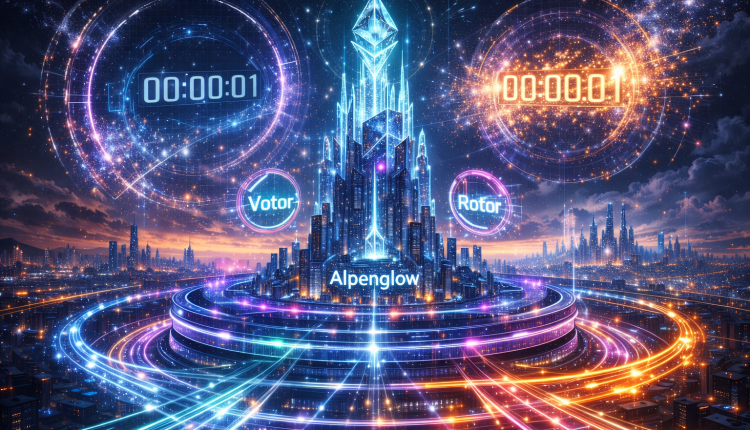
Solana is preparing a deep Layer-1 overhaul with Alpenglow — a consensus rewrite that aims to compress finality from seconds to milliseconds and reshape how the chain reaches agreement under load. If it lands as expected in 2026, it won’t be “more TPS marketing” — it will be a structural shift in how Solana operates.
This matters now because developers, validators, and DeFi teams don’t plan around price candles — they plan around finality, failure modes, and what happens when the chain is stressed.
You can see more updates and ecosystem stories in our dedicated Solana News section.
Online advertising service 1lx.online
What Alpenglow Changes: From “Fast Enough” to Near-Instant Confirmation
Alpenglow is positioned as a true consensus reboot, not an incremental parameter tweak. The goal is to move Solana’s perceived user experience closer to traditional payment rails — where confirmation feels immediate — while keeping the network’s throughput advantages.
The headline claim is finality falling from ~12.8 seconds toward ~150 milliseconds. Even if real-world finality varies by conditions, the direction is the point: Solana is trying to make finality the product, not just speed.
In practical terms, this would change how teams build:
- DeFi UX becomes less “waiting for confirmation” and more “action → result.”
- NFT mints and marketplaces can reduce failed clicks and stale state.
- Payments and consumer apps can behave like Web2 checkouts.
And it puts Solana back into a conversation that isn’t about hype cycles — it’s about engineering outcomes.
The Architecture Story: New Consensus Primitives, New Tradeoffs
Alpenglow is often discussed alongside new consensus components (frequently referred to as Votor / Rotor in community technical threads) and the idea of removing or reducing reliance on older assumptions that have historically shaped Solana’s design philosophy.
That matters because “faster” isn’t free:
Online advertising service 1lx.online
- When finality gets extremely low, network assumptions become more sensitive.
- Validator coordination, latency variance, and chain safety all become more visible.
- The chain’s “trust layer” becomes the real battleground.
This is why Alpenglow should be read as a credibility test: can Solana push the frontier while making the system more understandable and more stable for builders?
For broader infrastructure adoption narratives across the sector, see our Blockchain News coverage.
Validator Reality Check: Speed Is Useless Without Trust
Solana’s strongest pitch has always been performance — but its biggest risk has increasingly been trust: how the chain behaves when the stakes are highest.
Online advertising service 1lx.online
That’s why Alpenglow won’t be judged by a single metric. It will be judged by:
- Network resilience during congestion
- Predictability for app developers
- Stability for validators and RPC infrastructure
- Fairness in execution outcomes for users
If you want the framing that matters most, it’s this: the Solana Alpenglow upgrade is not only about speed — it’s about whether Solana can make “fast” feel safe.
(And yes, this is exactly why the Solana Alpenglow upgrade is already becoming a serious topic in engineering circles rather than just social chatter.)
Historical Context: BTCNews.space Already Flagged the Core Tension
Two earlier BTCNews.space reads help explain why a consensus reboot is even on the table:
- Solana’s Biggest Risk Isn’t Speed — It’s Trust
- Solana Validator Coordination Sparks a New Decentralization Debate
In that light, Alpenglow is a response to the market’s unspoken demand: don’t just be fast — be reliably fast in a way institutions, apps, and users can depend on.
You can follow ongoing updates in our Solana News coverage as the Solana Alpenglow upgrade narrative evolves through 2026.
Our creator. Creates amazing NFT collections! Support the editor - Bitcoin_Man(TON) / Bitcoin Man Stickers(TON) / BM Numbers (TON) / Comics Book (TON) / Bitcoin_Man (ETH)
Pi Network (Guide)is a new digital currency developed by Stanford PhDs with over 55 million participants worldwide. To get your Pi, follow this link https://minepi.com/Tsybko and use my username (Tsybko) as the invite code.
Binance: Use this link to sign up and get $100 free and 10% off your first months Binance Futures fees (Terms and Conditions).
Bitget: Use this link Use the Rewards Center and win up to 5027 USDT!(Review)
Bybit: Use this link (all possible discounts on commissions and bonuses up to $30,030 included) If you register through the application, then at the time of registration simply enter in the reference: WB8XZ4 - (manual)