
Ethereum 2026 Roadmap: Glamsterdam & Hegotá Aim to Redefine L1 Scaling
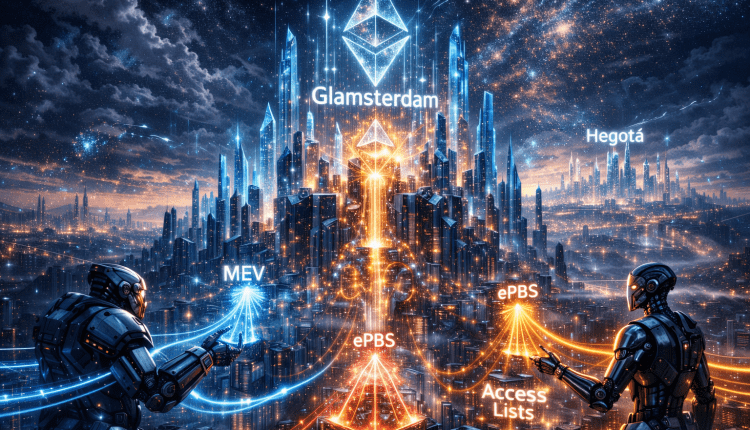
Ethereum core developers are moving into a faster upgrade cadence for 2026, with Glamsterdam targeted for the first half of the year and Hegotá planned later. The message is clear: Ethereum wants to scale Layer 1 execution, reduce MEV pressure, and harden the base layer without turning the protocol into an unreadable machine.
Ethereum upgrades are no longer “one big fork every once in a while.” They’re becoming a rhythm — and that shift matters for builders, validators, rollups, and anyone tracking the network’s long-term competitiveness. You can see more updates and market stories in our dedicated Ethereum News section.
Glamsterdam in H1 2026: Performance, MEV Fairness, and Execution Efficiency
Online advertising service 1lx.online
The Ethereum Glamsterdam upgrade is increasingly framed as an execution-focused fork: reduce bottlenecks, make block building less centralized, and set the stage for a higher-capacity base layer.
Two themes stand out in developer discussions:
Enshrined PBS (ePBS) and Block Production Neutrality
Glamsterdam is expected to push forward enshrined proposer-builder separation (ePBS) — a direction meant to lower the structural power of a small set of sophisticated block builders and reduce long-term centralization pressure.
Block-Level Access Lists and “Smoother” Execution Under Load
Another headline idea is Block-Level Access Lists, designed to make execution more predictable by pre-declaring state access. In plain terms: fewer surprises, fewer pathological worst-cases, and better performance when the chain is busy.
This is why the Ethereum Glamsterdam upgrade is being treated as more than “just another hard fork.” It’s part of an explicit attempt to make L1 execution scale in a way that doesn’t quietly sacrifice Ethereum’s decentralization goals.
Hegotá Later in 2026: Security Posture, Censorship Resistance, and the Next Feature Set
If Glamsterdam is about execution and block building dynamics, Hegotá is shaping up as the follow-through fork where Ethereum can lock in more of its base-layer security posture — including stronger censorship resistance narratives and a clearer path to future-proofing (including post-quantum discussions).
Online advertising service 1lx.online
Just as important as the feature list is the process: Ethereum developers have been aligning around a faster, more predictable fork cycle, which changes how the ecosystem plans product releases, validator ops, and infrastructure upgrades.
Why This Isn’t Just “Ethereum vs. Other L1s” — It’s Ethereum vs. Complexity
Ethereum’s biggest risk in 2026 may be self-inflicted: scaling faster while keeping the protocol coherent enough for node operators, client teams, and auditors.
That’s why roadmap items that improve execution efficiency and protocol neutrality matter. They’re not “nice-to-haves.” They are necessary upgrades if Ethereum wants to scale L1 without shifting the burden entirely to L2s and specialized infrastructure providers.
For broader protocol adoption trends across the industry, see our Blockchain News coverage.
Online advertising service 1lx.online
What Traders and Builders Should Watch On-Chain (Without Turning This Into a Price Story)
Even when the topic is “tech, not price,” the chain still tells a story. Here are the practical dashboards to monitor as Glamsterdam moves from scope → implementation → activation:
- Base-layer activity and gas behavior (network stress, execution conditions): Etherscan Gas Tracker
- Staking and supply dynamics (long-term security incentives): Glassnode Ethereum metrics
- Entity and wallet clustering (infrastructure concentration signals): Arkham Intelligence
This matters because if the Ethereum Glamsterdam upgrade succeeds at smoothing execution and reducing block-building centralization pressure, you should see it reflected in execution stability during high-load periods — not just in marketing narratives.
Historical Context: Ethereum Was Already Signaling This Shift
Two earlier BTCNews.space pieces foreshadowed why a faster roadmap is almost inevitable:
- Ethereum Rollups Are Now Competing Among Themselves — And That Changes Everything
- Ethereum Is Scaling Fast — And That’s Creating a New Governance Problem
The through-line: Ethereum can’t scale “in one dimension.” Every throughput win introduces governance, UX, and neutrality questions — and 2026 is where those tradeoffs become explicit.
Our creator. Creates amazing NFT collections! Support the editor - Bitcoin_Man(TON) / Bitcoin Man Stickers(TON) / BM Numbers (TON) / Comics Book (TON) / Bitcoin_Man (ETH)
Pi Network (Guide)is a new digital currency developed by Stanford PhDs with over 55 million participants worldwide. To get your Pi, follow this link https://minepi.com/Tsybko and use my username (Tsybko) as the invite code.
Binance: Use this link to sign up and get $100 free and 10% off your first months Binance Futures fees (Terms and Conditions).
Bitget: Use this link Use the Rewards Center and win up to 5027 USDT!(Review)
Bybit: Use this link (all possible discounts on commissions and bonuses up to $30,030 included) If you register through the application, then at the time of registration simply enter in the reference: WB8XZ4 - (manual)