
Solana Speed Race Is No Longer About TPS — It’s About Survival
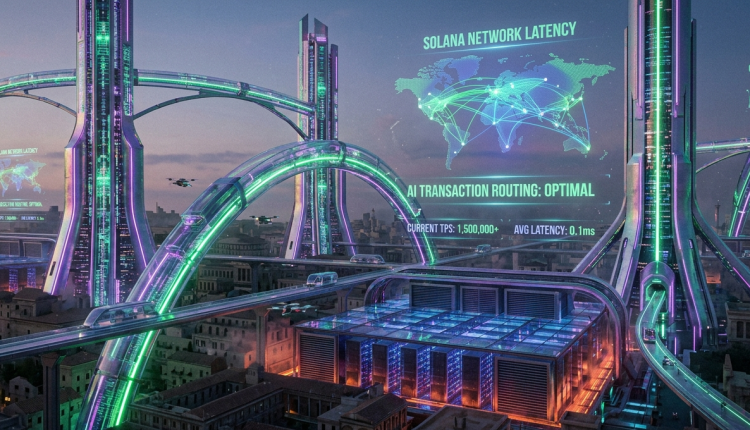
Solana News is once again dominating developer conversations across crypto as Firedancer upgrades, ultra-low-latency validator systems, infrastructure optimization, and network scaling debates accelerate across X, GitHub, and validator communities.
But the discussion is no longer simply:
“How fast is Solana?”
The real question becoming increasingly urgent is:
Can ultra-fast blockchains remain decentralized, globally distributed, and stable at planetary scale?
Online advertising service 1lx.online
That transforms Solana from a performance story into one of the most important infrastructure debates in crypto.
The Speed Race Has Entered a New Era
For years, blockchain competition centered around raw throughput metrics:
- TPS,
- block times,
- finality speeds,
- and transaction costs.
Now the conversation is evolving.
The new battleground is infrastructure survivability under extreme real-world demand.
Solana’s ecosystem is aggressively pushing toward:
- sub-second finality,
- validator optimization,
- high-frequency execution systems,
- and near real-time financial settlement architecture.
Projects like Firedancer and low-latency infrastructure models are redefining expectations for blockchain performance itself.
Online advertising service 1lx.online
BTCNews.space previously explored this shift in:
- Solana Firedancer Is Rewriting Blockchain Performance and Few Are Ready
- Solana 150ms Finality Push Is No Longer Hype The Upgrade Path Is Now Visible
The implications extend far beyond trading speed.
Milliseconds Are Becoming Financial Infrastructure
One of the biggest changes happening inside crypto infrastructure is psychological.
Online advertising service 1lx.online
Latency itself is becoming a competitive weapon.
As decentralized finance, AI agents, automated trading systems, and tokenized real-world assets scale globally, milliseconds increasingly matter more than branding narratives.
This creates a new generation of blockchain competition focused on:
- execution speed,
- infrastructure efficiency,
- validator communication,
- and geographic network positioning.
You can follow broader infrastructure evolution inside our dedicated Blockchain News section.
The future blockchain leaders may not be the chains with the loudest communities — but the ones capable of operating as real-time financial operating systems.
Validator Geography Is Becoming a Critical Risk
The deeper Solana pushes into ultra-fast execution, the more attention shifts toward infrastructure concentration risks.
This is where the debate becomes politically and economically significant.
A globally distributed blockchain must balance:
- performance,
- decentralization,
- redundancy,
- and resilience.
But ultra-low-latency systems naturally incentivize geographic clustering around:
- major data centers,
- premium internet routing infrastructure,
- and institutional-grade hardware environments.
BTCNews.space already analyzed this emerging concern in:
- Solana Speed Race Enters a New Phase as Validator Geography Becomes Critical
- Solana Biggest Risk Isn’t Speed It’s Trust
This creates an uncomfortable reality:
the faster a blockchain becomes, the more fragile decentralization can potentially become beneath the surface.
Infrastructure Wars Are Quietly Replacing Narrative Wars
Crypto markets historically focused heavily on narratives:
- meme cycles,
- ecosystem hype,
- influencer momentum,
- and token speculation.
But infrastructure discussions are increasingly replacing narrative wars.
Developers now openly debate:
- validator concentration,
- bandwidth asymmetry,
- hardware requirements,
- geographic redundancy,
- and execution-layer survivability.
This marks a major maturation phase for crypto.
The industry is beginning to recognize that blockchain systems are no longer experimental social networks.
They are evolving into critical financial infrastructure.
That means uptime, latency, validator resilience, and global coordination matter far more than they did during previous market cycles.
Solana May Be Defining the Future Shape of Real-Time Finance
The broader significance extends beyond Solana itself.
If blockchain infrastructure eventually powers:
- AI economies,
- tokenized securities,
- gaming systems,
- real-time payments,
- and machine-to-machine commerce,
then execution speed becomes existential infrastructure rather than a marketing feature.
This is why Solana discussions increasingly resemble debates seen in:
- high-frequency trading,
- cloud computing,
- internet backbone architecture,
- and global payment network engineering.
The crypto industry may be entering a phase where the winning chains are determined not by ideology alone — but by their ability to survive under global-scale financial pressure.
In that world, milliseconds matter.
And Solana may be helping define the rules of the next infrastructure era.
Our creator. Creates amazing NFT collections! Support the editor - Bitcoin_Man(TON) / Bitcoin Man Stickers(TON) / BM Numbers (TON) / Comics Book (TON) / Bitcoin_Man (ETH)
Pi Network (Guide)is a new digital currency developed by Stanford PhDs with over 55 million participants worldwide. To get your Pi, follow this link https://minepi.com/Tsybko and use my username (Tsybko) as the invite code.
Binance: Use this link to sign up and get $100 free and 10% off your first months Binance Futures fees (Terms and Conditions).
Bitget: Use this link Use the Rewards Center and win up to 5027 USDT!(Review)
Bybit: Use this link (all possible discounts on commissions and bonuses up to $30,030 included) If you register through the application, then at the time of registration simply enter in the reference: WB8XZ4 - (manual)