
Zcash Technology May Be Escaping Crypto — And Governments Are Paying Attention
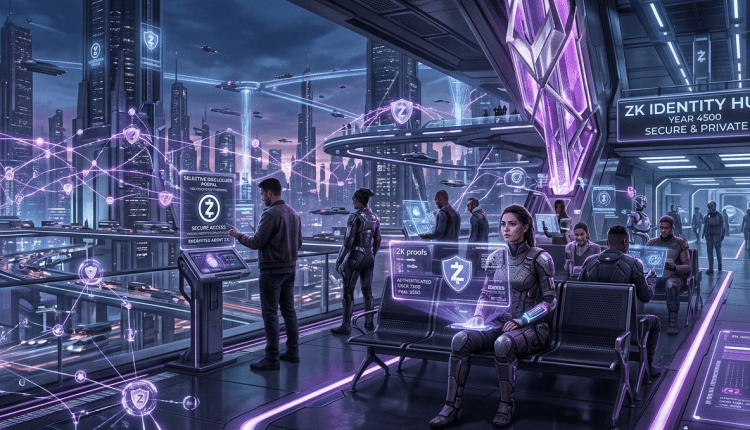
Zcash is rapidly returning to the center of global technology discussions — but not only because of private transactions or cryptocurrency markets.
In 2026, zero-knowledge technology associated with the Zcash ecosystem is increasingly expanding into:
- digital identity systems,
- selective disclosure infrastructure,
- AI verification frameworks,
- and enterprise-grade authentication models.
Online advertising service 1lx.online
That shift is changing the narrative completely.
Zcash may no longer be viewed only as a privacy coin.
It may quietly be evolving into infrastructure for the future internet itself.
The broader trend is becoming increasingly visible across the entire Zcash News ecosystem as zero-knowledge systems move far beyond speculative crypto markets.
Zero-Knowledge Identity Is Becoming a Serious Infrastructure Narrative
For years, privacy-focused cryptocurrencies were largely framed around anonymous payments and regulatory concerns.
But the newest wave of zero-knowledge development is focused on something much larger:
proving information without exposing the underlying data itself.
That capability is becoming increasingly attractive for:
- digital identity systems,
- enterprise authentication,
- government compliance frameworks,
- and AI verification layers.
Instead of revealing full personal information, users could eventually prove:
Online advertising service 1lx.online
- age,
- citizenship,
- credentials,
- financial status,
- or access permissions
through selective disclosure systems powered by zero-knowledge proofs.
That changes the entire conversation around privacy infrastructure.
The debate is no longer simply:
“Should private crypto exist?”
It is increasingly becoming:
“How will the internet function when privacy-preserving verification becomes normal infrastructure?”
Online advertising service 1lx.online
You can follow more infrastructure-focused adoption trends in our dedicated Blockchain News section.
Zcash Technology Is Quietly Escaping the Crypto Bubble
One reason this narrative is becoming powerful is because zero-knowledge systems are increasingly being explored outside traditional crypto ecosystems.
Privacy-tech researchers, enterprise developers, and AI infrastructure teams are all experimenting with:
- ZK authentication,
- proof systems,
- decentralized identity models,
- and selective disclosure architectures.
This means the technology itself may continue spreading even if crypto speculation slows down.
That distinction matters.
Historically, privacy coins were often treated as isolated financial tools.
Now zero-knowledge technology is increasingly viewed as foundational internet infrastructure.
BTCNews.space has already explored this broader transformation in previous reports including:
- Zcash Technology Escapes Crypto as Zero-Knowledge IDs Go Mainstream
- Zcash Is Quietly Becoming the Privacy Layer for Digital Identity
AI Verification Systems Could Accelerate ZK Adoption
Another major catalyst behind the narrative is artificial intelligence.
As AI-generated content becomes increasingly sophisticated, the internet faces a growing verification crisis.
Systems capable of proving:
- authenticity,
- ownership,
- human identity,
- and access rights
without exposing unnecessary personal information are becoming strategically important.
That is where zero-knowledge technology may become critical.
Instead of uploading sensitive personal data repeatedly across platforms, future systems could allow users or AI agents to verify specific conditions cryptographically without revealing the underlying identity itself.
That possibility is why ZK tooling is increasingly appearing inside discussions around:
- AI governance,
- machine identity,
- digital trust systems,
- and autonomous internet infrastructure.
Recent Artificial Intelligence News coverage has already highlighted how cryptographic verification systems are becoming increasingly important in AI-driven environments.
Regulators May Soon Face a Much Bigger Privacy Debate
One of the most important implications is political rather than technical.
Governments previously focused primarily on privacy coins as financial instruments.
But zero-knowledge infrastructure changes the scale of the discussion entirely.
If privacy-preserving verification becomes integrated into:
- enterprise systems,
- identity platforms,
- AI infrastructure,
- and mainstream internet architecture,
then the next major privacy battle may occur far outside crypto trading markets.
In that future, zero-knowledge systems become less about hiding transactions and more about controlling how digital identity itself functions online.
That creates a new regulatory challenge:
privacy technology may continue spreading globally even if cryptocurrency speculation fades into the background.
For many analysts, this is why Zcash’s long-term importance may no longer depend entirely on its role as a cryptocurrency.
Instead, it may increasingly represent one of the earliest large-scale experiments in privacy infrastructure for the future digital world.
Our creator. Creates amazing NFT collections! Support the editor - Bitcoin_Man(TON) / Bitcoin Man Stickers(TON) / BM Numbers (TON) / Comics Book (TON) / Bitcoin_Man (ETH)
Pi Network (Guide)is a new digital currency developed by Stanford PhDs with over 55 million participants worldwide. To get your Pi, follow this link https://minepi.com/Tsybko and use my username (Tsybko) as the invite code.
Binance: Use this link to sign up and get $100 free and 10% off your first months Binance Futures fees (Terms and Conditions).
Bitget: Use this link Use the Rewards Center and win up to 5027 USDT!(Review)
Bybit: Use this link (all possible discounts on commissions and bonuses up to $30,030 included) If you register through the application, then at the time of registration simply enter in the reference: WB8XZ4 - (manual)