
Zcash Technology Escapes Crypto as Zero-Knowledge IDs Go Mainstream
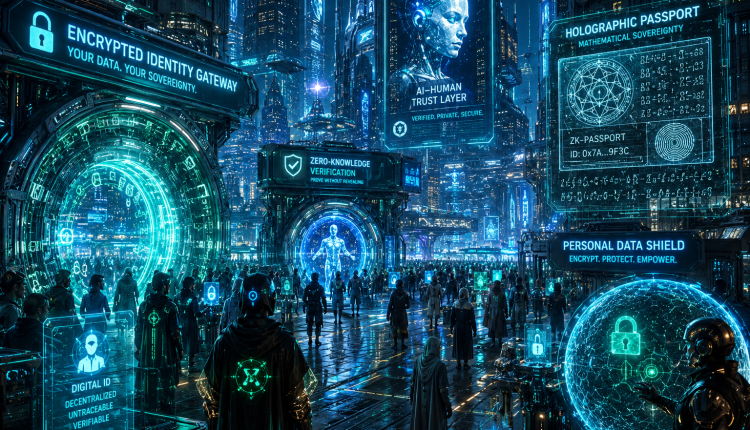
Privacy technology once associated mainly with anonymous crypto payments is rapidly evolving into something much bigger. The same zero-knowledge cryptography pioneered by Zcash is now becoming part of the global conversation around AI verification, digital identity, and the future architecture of the internet itself.
As governments, AI companies, and Web3 developers search for ways to verify identity without exposing personal data, zero-knowledge systems are emerging as one of the strongest candidates for the next generation of internet infrastructure.
The idea is simple — prove something is true without revealing the underlying information.
Online advertising service 1lx.online
That concept may soon reshape everything from logins and passports to AI-human verification systems.
The rise of zero-knowledge identity systems is becoming one of the most important narratives inside the broader Blockchain News ecosystem.
Unlike older identity systems that require users to expose sensitive personal information, ZK-powered infrastructure allows verification without full disclosure. A user could theoretically prove they are over 18, hold citizenship, or own a verified account without sharing their actual documents publicly.
This is becoming critically important as AI-generated deepfakes, synthetic identities, and automated bot systems explode across the internet in 2026.
Why Zcash Matters More Than Ever
For years, many investors viewed Zcash primarily as a privacy-focused cryptocurrency competing with projects like Monero News or Dash.
But developers are increasingly arguing that the true long-term value of Zcash may not be the coin itself — but the cryptographic infrastructure it helped popularize.
Zero-knowledge proofs, shielded transactions, and selective disclosure systems built around Zcash research are now influencing:
- decentralized identity frameworks
- AI verification systems
- private authentication layers
- enterprise blockchain infrastructure
- government digital identity experiments
Online advertising service 1lx.online
The narrative around privacy crypto is quietly shifting.
Instead of “anonymous payments,” the conversation is moving toward “privacy-preserving verification.”
That changes the scale of the story dramatically.
You can explore more infrastructure developments in our dedicated Zcash News section.
AI Deepfakes Are Accelerating the Need for ZK Verification
Online advertising service 1lx.online
One of the biggest catalysts behind this movement is artificial intelligence.
AI-generated video, voice cloning, fake identities, and autonomous agents are creating a massive trust crisis online. Social platforms, financial systems, and governments increasingly need ways to verify authenticity without turning the internet into a surveillance machine.
This is where zero-knowledge systems become extremely attractive.
Instead of uploading sensitive identity documents to centralized databases, users could mathematically prove authenticity while keeping private data hidden.
That concept is attracting growing attention from:
- Ethereum ZK researchers
- AI identity startups
- cryptographers
- digital governance groups
- enterprise authentication developers
Recent discussions across the broader Ethereum News ecosystem also show how zero-knowledge infrastructure is becoming central to scaling, identity, and interoperability discussions far beyond privacy coins alone.
The shift suggests that crypto-native privacy technology is beginning to escape the crypto bubble.
From Crypto Privacy to Global Internet Infrastructure
The most important part of this trend is that it extends far beyond traders and speculation.
Developers increasingly describe zero-knowledge systems as a future “trust layer” for the internet itself.
Potential future use cases include:
Digital Passports
Governments may eventually use privacy-preserving proofs for border systems and identity verification.
AI-Human Authentication
Users could prove they are real humans without exposing personal information publicly.
Financial Compliance
Banks and exchanges could verify compliance requirements without storing massive amounts of sensitive user data.
Social Platforms
Platforms may eventually use ZK proofs to reduce bots while preserving anonymity.
Enterprise Systems
Companies could verify credentials and permissions internally without exposing confidential records.
This creates a much broader narrative than traditional cryptocurrency adoption.
Instead of crypto becoming mainstream, the underlying cryptography itself may become invisible infrastructure powering the next version of the internet.
That possibility is why ZK technology discussions are accelerating so quickly across research communities in 2026.
ZK Infrastructure Could Become the Next Blockchain Arms Race
Another reason this story matters is competition.
Ethereum rollups, modular blockchains, decentralized identity networks, and AI verification startups are all racing to integrate increasingly advanced zero-knowledge systems.
This is turning ZK cryptography into one of the most strategically important sectors in blockchain development.
Projects capable of balancing:
- privacy
- scalability
- compliance
- usability
- decentralized verification
may ultimately define the next era of digital infrastructure.
And while regulators once treated privacy technology primarily as a threat, many institutions are now beginning to explore whether privacy-preserving compliance systems are actually necessary for the future internet economy.
That represents a major philosophical shift from previous years.
Long-Term Outlook
The biggest irony surrounding Zcash in 2026 may be this:
Its technology could become globally influential even if most people never directly use the coin itself.
The internet increasingly needs systems that can verify identity, authenticity, and trust without exposing private information everywhere online.
Zero-knowledge cryptography appears uniquely positioned to solve that problem.
If the current trend continues, ZK systems may eventually become as foundational to the internet as encryption itself.
And the projects that pioneered these ideas years earlier could suddenly become central to the next technological cycle.
Our creator. Creates amazing NFT collections! Support the editor - Bitcoin_Man(TON) / Bitcoin Man Stickers(TON) / BM Numbers (TON) / Comics Book (TON) / Bitcoin_Man (ETH)
Pi Network (Guide)is a new digital currency developed by Stanford PhDs with over 55 million participants worldwide. To get your Pi, follow this link https://minepi.com/Tsybko and use my username (Tsybko) as the invite code.
Binance: Use this link to sign up and get $100 free and 10% off your first months Binance Futures fees (Terms and Conditions).
Bitget: Use this link Use the Rewards Center and win up to 5027 USDT!(Review)
Bybit: Use this link (all possible discounts on commissions and bonuses up to $30,030 included) If you register through the application, then at the time of registration simply enter in the reference: WB8XZ4 - (manual)