DOGS NFT Evolves With Upgrades, Recraft, and Scarcity Rules
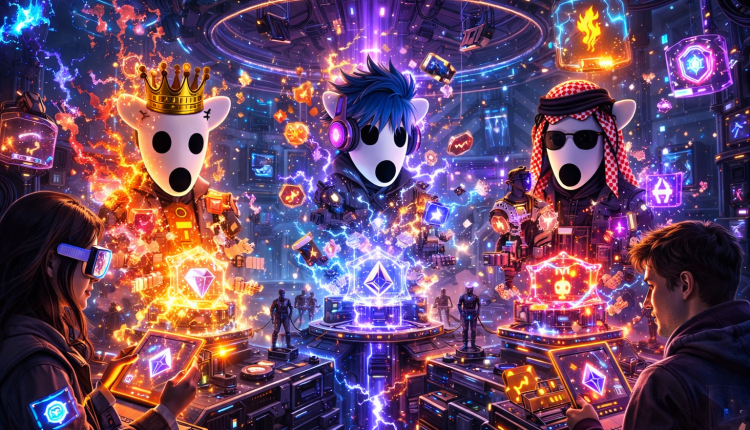
The DOGS NFT ecosystem is entering a more mature phase, shifting from static ownership toward programmable identity, collectible scarcity, and deeper utility. What started as a viral Telegram-native NFT concept is now becoming a more structured on-chain system built around customization, permanence, and holder status.
DOGS is no longer treating NFTs as simple profile pictures. The project is turning them into dynamic digital identities that can change over time, carry permanent attribute history, and potentially unlock a broader layer of community access.
Online advertising service 1lx.online
This latest product direction also matters for the wider TON ecosystem. As Telegram-native assets compete for relevance, DOGS appears to be building a stronger identity loop between ownership, social status, and app-level visibility. Readers following this segment can explore more updates in our dedicated DOGS News and broader TON News sections.
On-Chain Avatars Push DOGS NFTs Beyond Static Collectibles
One of the biggest upgrades already live is native on-chain NFT display inside the DOGS app. Users can now view newly acquired NFTs directly in the application, assign them as avatars, and see those avatars disappear automatically if the NFT is sold.
That may sound simple on the surface, but it changes the role of the asset. A DOGS NFT is no longer just something held in a wallet or listed on a marketplace. It becomes a visible identity layer inside the product itself.
This kind of app-level integration matters because it ties ownership to presence. In practical terms, the collection gains social utility: the NFT reflects who the holder is inside the ecosystem, not just what they own on-chain. That makes DOGS NFT upgrade system conversations more relevant, because future customization is no longer cosmetic alone — it becomes tied to how users appear across the community.
This direction also fits a broader pattern already visible across Telegram and TON-based products, where digital assets are being used less as isolated collectibles and more as portable social markers. That trend was already visible in earlier BTCNews.space coverage, including 1000 NFTs Gone Fast: DOGS PFP Builder Turns Telegram Stickers Into Web3 Assets and DOGS Turned Telegram Stickers Into NFTs and TON Social Economy Is Taking Shape.
Recraft Could Become the Next Major Retention Engine
The upcoming recraft feature, expected in roughly three to four weeks if development stays on track, may be the update that turns passive holders into active participants again.
According to the roadmap direction described by the team, recraft will reuse much of the logic behind the original crafting process while giving users more flexibility to rebuild or rethink NFT compositions. That is an important design choice. Instead of abandoning the original mechanic, DOGS seems to be extending it into a second lifecycle.
Online advertising service 1lx.online
This matters because collections often lose momentum once the initial mint or crafting wave passes. Recraft offers a way to reactivate dormant users without relying on new supply alone. In theory, it creates new engagement loops while preserving continuity with the project’s earlier phase.
If executed well, the DOGS NFT upgrade system and recraft layer could work together as a retention framework: one mechanic deepens the NFT over time, while the other reopens creative decision-making for holders who want to refine what they own.
The DOGS NFT Upgrade System Adds Persistent On-Chain History
The most important structural change may be the upgrade framework itself. DOGS plans to allow modification of any NFT in the collection, regardless of whether it was originally crafted by the current holder or acquired later on the secondary market.
That instantly raises the strategic value of existing NFTs. Instead of treating marketplace purchases as final forms, DOGS is introducing a system where holders can continue evolving those assets after acquisition.
Online advertising service 1lx.online
New attributes are expected to be unlocked gradually through several mechanisms, including sticker burning, holding $DOGS, and completing tasks tied to DOGS or partner campaigns. Each unlocked trait is designed to remain permanently attached to the NFT, creating a persistent record of transformation over time.
This is where the DOGS NFT upgrade system becomes more than a cosmetic feature. It introduces a form of composable asset history. A DOGS NFT would not just show its current appearance — it could reflect the path taken to get there. That gives the asset a narrative dimension, which can matter a lot in social collections where provenance, rarity, and user effort shape perceived value.
Scarcity Controls Are Meant to Protect the Market
The project is also making it clear that rarity protection is a core design principle. That may be the most important signal for existing holders.
Without supply controls, upgrade systems can weaken a collection by allowing rare looks or traits to be recreated too easily from cheaper assets. DOGS appears to be taking the opposite route. Most existing attributes are not expected to be reissued, while rare visual elements — especially those linked to sticker burning — should remain limited.
That approach is meant to stop the collection from collapsing into infinite duplication. Instead of letting customization destroy rarity, the team is trying to create a system where creativity exists within supply discipline.
In market terms, that is critical. If users believe rare attributes can be endlessly reproduced, secondary-market pricing weakens fast. But if high-value traits remain tightly controlled, customization can actually strengthen demand by making upgraded NFTs feel more distinct rather than more replaceable.
This is why the DOGS NFT upgrade system is likely to be judged not only by how fun it feels, but by whether it preserves collector confidence.
Sticker Burning Creates Permanent Consequences
Sticker burning appears to be one of the most interesting mechanics in the new model because it introduces irreversible action.
When a sticker is burned, the sticker is gone permanently, while the unlocked NFT attribute remains embedded in the asset forever. Even after resale, that attribute history stays with the NFT.
That structure gives the collection a deeper sense of permanence. Instead of temporary cosmetics or reversible metadata edits, DOGS is leaning into consequence-based design. Holders are not just decorating assets — they are changing them in ways that cannot be undone through simple reversal.
From a market perspective, this could make some NFTs increasingly differentiated over time. Two assets that once looked comparable may diverge sharply depending on what was burned, what was unlocked, and when those transformations happened.
Original Craft Pairs Are Closing — But Flexibility Is Expanding
Another important detail is that unique combinations from the first crafting era will no longer be reproducible. In other words, the original creation phase is becoming historically fixed.
At the same time, DOGS plans to introduce new flexibility through mechanics that let users break existing combinations and replace individual attributes. This is an interesting balance: the collection closes one door to preserve historical scarcity while opening another to keep users engaged.
That balance could prove essential for long-term health. A collection that never changes becomes stale. A collection that changes without limits becomes diluted. DOGS appears to be trying to sit between those extremes by allowing controlled recomposition without reopening the original supply structure.
“God NFTs,” OG Status, and Origin Caps Reinforce Hierarchy
The most exclusive tier remains the so-called “god” NFTs, which were originally tied to holders of the full OG sticker collection. These assets can still circulate on the market, and their attributes remain reusable after purchase, preserving their premium role in the ecosystem.
On top of that, OG holders are expected to receive exclusive looks applicable to any NFT, strengthening the reward layer for early participants. That reinforces a status hierarchy that many social NFT ecosystems rely on: early believers get enduring visual and social advantages.
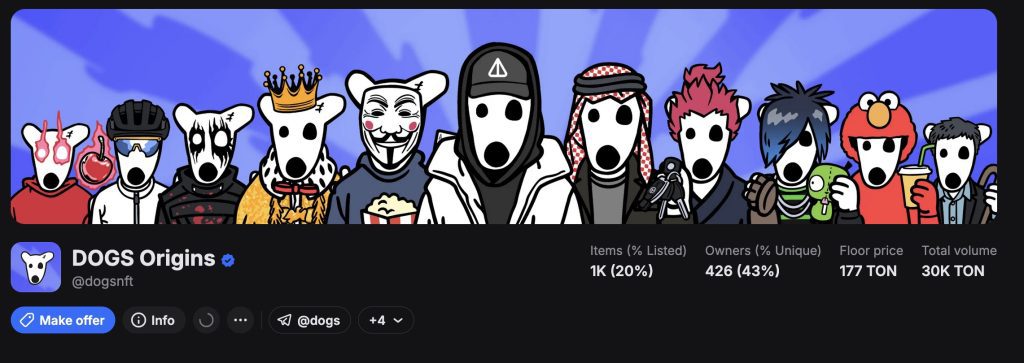
Meanwhile, the DOGS Origins collection remains capped at 1,000 NFTs, with no new mint expansion planned. Supply can only shrink over time through burning, which introduces another scarcity lever that may matter more as the ecosystem matures.
DOGS Is Building More Than a Collection
The bigger story is that DOGS is not framing these NFTs as isolated art objects. The assets are being positioned as community identity components, access tools, and potential gateways to future ecosystem benefits.
That includes possible use as access passes for online and offline events, entry into exclusive spaces, early feature access, governance-linked privileges, and partner discounts. Whether all of that arrives at scale remains to be seen, but the strategic direction is clear.
DOGS wants each NFT to feel like a modular character shaped by the user, rather than a randomly assigned collectible with limited relevance after mint. If that model holds, the collection may become one of the more interesting examples of Telegram-native NFT infrastructure evolving into a real social economy layer on TON.
Why This Update Matters Now
The DOGS roadmap now looks less like a short meme cycle and more like an attempt to build a persistent, composable digital identity system. On-chain avatars, recraft mechanics, permanent upgrades, sticker-burning consequences, and hard scarcity rules all point in that direction.
The success of that vision will depend on execution. Recraft must feel intuitive, upgrades must stay meaningful, and rarity controls must remain credible. But conceptually, the project is making a serious move: from collectible ownership to programmable social identity.
That is why this update matters beyond DOGS itself. If it works, it could become a template for how Telegram-based NFT ecosystems evolve — not through endless new drops, but through layered customization, visible utility, and long-term scarcity discipline.
Our creator. Creates amazing NFT collections! Support the editor - Bitcoin_Man(TON) / Bitcoin Man Stickers(TON) / BM Numbers (TON) / Comics Book (TON) / Bitcoin_Man (ETH)
Pi Network (Guide)is a new digital currency developed by Stanford PhDs with over 55 million participants worldwide. To get your Pi, follow this link https://minepi.com/Tsybko and use my username (Tsybko) as the invite code.
Binance: Use this link to sign up and get $100 free and 10% off your first months Binance Futures fees (Terms and Conditions).
Bitget: Use this link Use the Rewards Center and win up to 5027 USDT!(Review)
Bybit: Use this link (all possible discounts on commissions and bonuses up to $30,030 included) If you register through the application, then at the time of registration simply enter in the reference: WB8XZ4 - (manual)