
A beginner-friendly ethical guide to the environmental impact of crypto mining, renewable solutions, and the future of sustainable blockchain energy.
Table of Contents
- Introduction
- Why Mining Impacts the Environment
- Energy Consumption: The Core Argument
- How Bitcoin Miners Affect Climate Change
- Green Mining: What Is Changing in 2025
- Ethical Questions Beginners Should Consider
- Forecast: Mining and Sustainability by 2035
- Conclusion
Online advertising service 1lx.online
Introduction
Cryptocurrency mining has long been at the center of environmental debates. For beginners who want to understand the ethical side of cryptocurrency, learning how mining affects climate change “on the topic of the article” is essential. Mining can be resource-intensive, but the industry is evolving rapidly, creating new ways to reduce environmental harm.
This guide explains the environmental impact, what is changing, and how newcomers can look at mining responsibly.
Why Mining Impacts the Environment
Mining is the process that powers blockchains like Bitcoin. It requires:
- powerful hardware
- continuous electricity
- cooling systems
- large mining farms
The more miners compete, the higher the network’s total energy consumption.
Environmental criticism often focuses on:
- CO₂ emissions from fossil fuels
- energy waste
- hardware production and waste
- heat pollution
Online advertising service 1lx.online
For beginners exploring the ethical dimension “on the topic of the article,” it’s important to know that not all mining has the same footprint.
Energy Consumption: The Core Argument
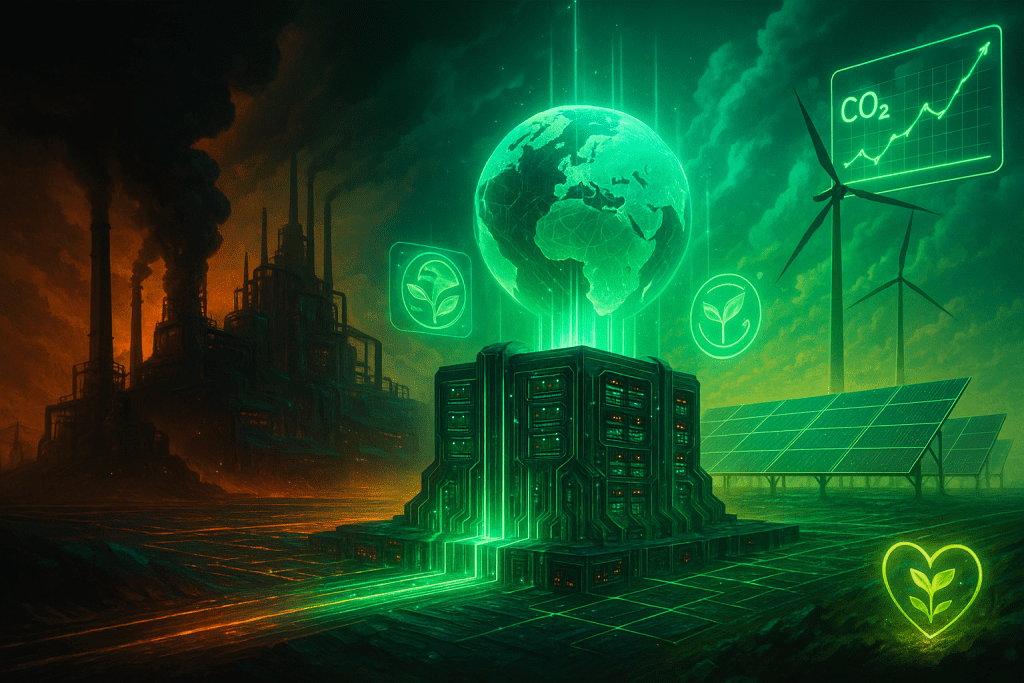
Bitcoin’s Proof-of-Work requires miners to solve complex calculations. Critics argue this consumes more electricity than entire countries. However, the nuance lies in where that energy comes from.
Online advertising service 1lx.online
Three key factors:
- Energy type — renewable, mixed, or fossil-based.
- Energy location — stranded, wasted, or grid-based.
- Energy purpose — securing a global financial system.
Many mining farms now use:
- hydroelectric power
- geothermal energy
- solar farms
- flare-gas-recapture systems
Renewable mining is growing faster than most industries.
How Bitcoin Miners Affect Climate Change
Mining affects the climate in several ways:
1. Carbon Emissions
If miners use fossil fuels, emissions rise. This is the main environmental concern.
2. Heat Production
Mining farms produce heat that can warm buildings or greenhouses. Some regions repurpose it for agriculture.
3. E-waste
Hardware becomes outdated, creating large amounts of electronic waste.
4. Grid Pressure
In some regions, mining strains local power grids.
For beginners studying how mining relates to sustainability “on the topic of the article,” these factors explain why mining is not inherently harmful — but depends entirely on energy sources and policy.
Green Mining: What Is Changing in 2025
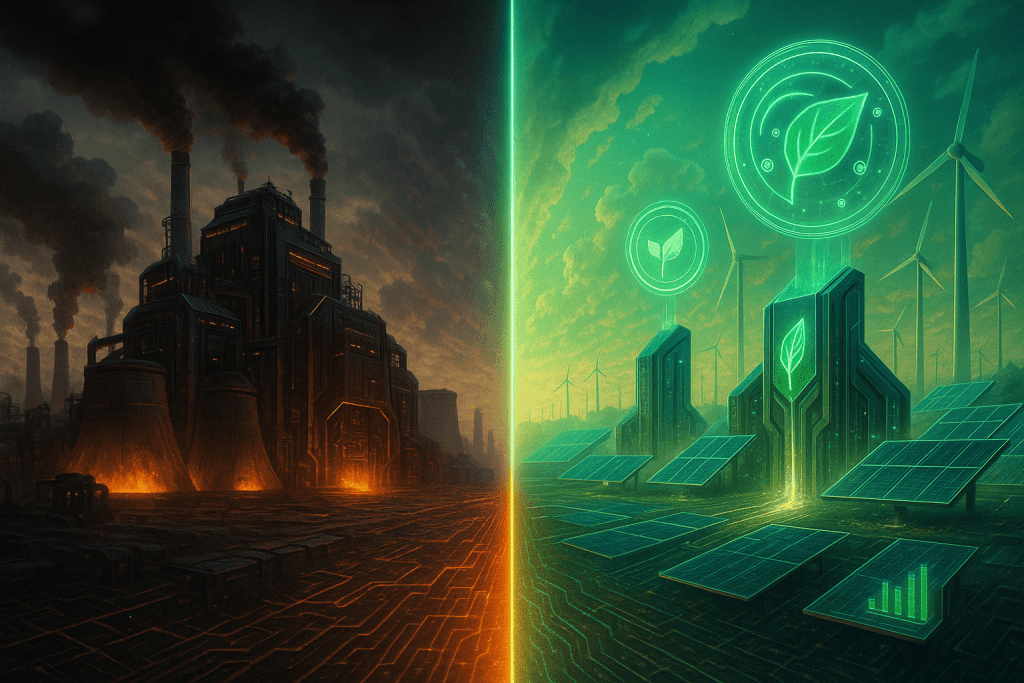
Mining is becoming greener due to:
- regulation pushing for renewable energy
- profit incentives for cheap clean power
- flare gas mining (reducing methane emissions)
- heat reuse systems
- new technologies optimizing ASIC power
Examples of green innovations:
- Mining farms built next to hydropower plants
- Bitcoin miners stabilizing electric grids during low demand
- Countries using geothermal power (like Iceland and El Salvador)
- Universities researching carbon-neutral mining designs
Green mining is now one of the most rapidly growing sectors in the entire blockchain ecosystem.
Ethical Questions Beginners Should Consider
If you are new to crypto, ask yourself:
- Does the project rely on sustainable energy?
- Is mining essential to the technology’s security?
- Does the environmental cost match the social benefit?
- Which regions produce the highest emissions?
- Is the project working toward reducing its footprint?
Mining ethics is about striking a balance between innovation and planetary responsibility.

Forecast: Mining and Sustainability by 2035
By 2035, experts expect:
- 80% of mining to run on renewable energy
- flare-gas mining to reduce methane waste worldwide
- new ASIC technology to cut power requirements
- mining farms to act as energy-balancing partners for grids
- governments to offer green mining incentives
Mining will likely become a tool for climate solutions, not a driver of climate problems.
Conclusion
Mining plays a crucial role in blockchain security, but also raises ethical questions “on the topic of the article.” Beginners must understand that mining is not inherently harmful — it depends on how responsibly it is performed. The future of mining lies in renewable energy, climate-positive innovation, and smarter infrastructure.
Sustainable mining is not only possible — it is becoming the industry standard.
Our creator. Creates amazing NFT collections! Support the editor - Bitcoin_Man(TON) / Bitcoin Man Stickers(TON) / BM Numbers (TON) / Comics Book (TON) / Bitcoin_Man (ETH)
Pi Network (Guide)is a new digital currency developed by Stanford PhDs with over 55 million participants worldwide. To get your Pi, follow this link https://minepi.com/Tsybko and use my username (Tsybko) as the invite code.
Binance: Use this link to sign up and get $100 free and 10% off your first months Binance Futures fees (Terms and Conditions).
Bitget: Use this link Use the Rewards Center and win up to 5027 USDT!(Review)
Bybit: Use this link (all possible discounts on commissions and bonuses up to $30,030 included) If you register through the application, then at the time of registration simply enter in the reference: WB8XZ4 - (manual)