
Learn the difference between public and private keys, how they work, and how to protect your crypto assets with proper key management.
Table of Contents
- Introduction
- What Are Public and Private Keys?
- How Public Keys Work
- How Private Keys Work
- Public vs Private Keys: The Key Differences
- Why This Topic Matters for Every New Crypto User
- How Hackers Exploit Key Misunderstanding
- Best Practices for Key Storage
- Public and Private Keys in Different Blockchains
- The Future of Key Management
- Forecasts: What Will Crypto Security Look Like in 2030?
- Conclusion
Online advertising service 1lx.online
Introduction
Understanding public keys and private keys is one of the most fundamental pillars of cryptocurrency security. Every blockchain transaction relies on this cryptographic system. Yet for beginners, it is often confusing — which is why this guide explains everything clearly and thoroughly on the topic of the article.
Public and private keys determine who controls crypto, how it is accessed, and how secure your digital assets truly are. This article explores the mechanics behind keys, security practices, hacker strategies, and the future of crypto protection.
What Are Public and Private Keys?
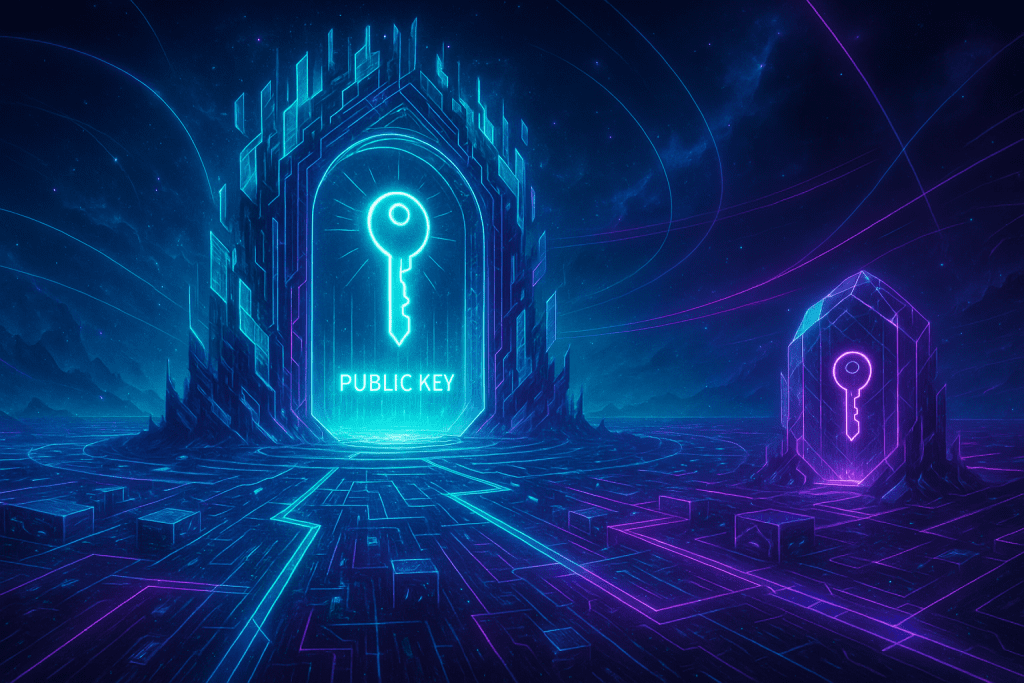
Public and private keys are paired cryptographic components that enable secure participation in blockchain networks.
- Public Key — acts like your “bank account number”
- Private Key — acts like your “master password”
Together, they form the backbone of ownership in decentralized finance.
How Public Keys Work
Public Keys and Crypto Addresses
Online advertising service 1lx.online
A public key is generated from a private key using one-way cryptographic functions. It enables others to send crypto to your wallet without ever revealing your private key.
A public key often transforms into a shorter, user-friendly format called a crypto address.
This one-way generation ensures:
- high security
- anonymity
- transparency
Use case overview:
Online advertising service 1lx.online
- receiving funds
- verifying signatures
- interacting with smart contracts
- accessing blockchain services
Why Public Keys Matter
Public keys are essential for blockchain interoperability. They allow open interaction while keeping personal data secure.
Public keys are safe to share, but they are still foundational to user identity on the blockchain — which is why every beginner must understand them on the topic of the article.
How Private Keys Work
The Core of Ownership
A private key is the ultimate authority over a crypto wallet. Anyone who holds it can spend the associated crypto — instantly and irreversibly.
There is no password reset.
No customer support recovery.
No appeal mechanism.
What private keys do:
- sign transactions
- authorize smart contract interactions
- unlock full wallet access
- prove ownership in a decentralized system
This is why private key security is the single most important concept on the topic of the article.
Seed Phrases and Backup
Modern wallets use seed phrases to help users back up their private keys. A seed phrase is a 12–24-word sequence that can recreate the entire wallet.
Best practices include:
- write seed phrases offline
- store in multiple secure locations
- avoid taking digital photos
- never share with anyone
- never enter it into “airdrop” sites
Even exchanges and professional traders follow this rule.
Public vs Private Keys: The Key Differences
Public Key:
- shareable
- used to receive crypto
- mathematically derived from private key
- visible on blockchain explorers
Private Key:
- NEVER share
- controls full access
- required to sign transactions
- must be stored offline securely
Quick Comparison Table
| Feature | Public Key | Private Key |
|---|---|---|
| Shareable? | Yes | Never |
| Main Use | Receive & verify | Send & sign |
| Security Level | Low risk | Highest risk |
| Backup | Not required | Essential |
These differences form the core understanding on the topic of the article.
Why This Topic Matters for Every New Crypto User
The majority of crypto losses do not come from blockchain exploits — they come from human mistakes, especially around private key exposure.
Beginners often:
- confuse public and private keys
- trust unsafe wallet apps
- keep photos of seed phrases
- enter keys into scam websites
- leave all funds on centralized exchanges
Understanding key management prevents irreversible losses.
How Hackers Exploit Key Misunderstanding
Hackers rarely attack blockchains directly — instead, they exploit user mistakes.
Common attack types:
- phishing sites mimicking real wallets
- fake customer support asking for seed phrases
- malware keyloggers
- clipboard hijackers replacing wallet addresses
- cloud storage breaches
- fake airdrops requiring private key entry
Real-world consequences:
- total loss of funds
- irreversible theft
- no legal recovery mechanisms
When you lose control of your private key, you lose control of your assets permanently.
Best Practices for Key Storage
Cold Wallets
Stored offline, immune to remote attacks. Ideal for long-term holdings.
Hot Wallets
Connected to the internet. Convenient, but riskier. Good for daily transactions.
Hardware Wallets
The safest option for private key management. Designed to isolate keys from online threats.
Additional Recommendations:
- use strong passwords
- enable 2FA
- avoid browser extensions you don’t trust
- never paste seed phrases on websites

Public and Private Keys in Different Blockchains
Different chains use different cryptographic standards, but the principle remains the same:
Bitcoin (ECDSA)
Ethereum (secp256k1)
Solana (ed25519)
TON (modern signature schemes)
But the rule is consistent:
If you control the private key, you control the funds.
This applies to all blockchains without exception.
The Future of Key Management
As crypto adoption grows, key management must evolve. Today’s systems, while secure, are too technical for mainstream users.
Innovations coming soon:
- social recovery wallets
- multi-party computation (MPC)
- passwordless key systems
- quantum-resistant encryption
- AI-driven security monitoring
These systems aim to protect users without exposing private keys.
Forecasts: What Will Crypto Security Look Like in 2030?
1. Private keys will no longer be fully user-managed
Wallets will automate security without compromising decentralization.
2. AI will prevent phishing attacks in real time
Users will receive warnings before interacting with scam sites.
3. Seed phrases will be replaced
More intuitive authentication systems will take over.
4. Hardware wallets will become universal
Small, cheap, and integrated into everyday devices.
5. Zero-knowledge systems will protect identities
Users will authenticate without revealing sensitive data.
Security will become simpler, not weaker.
Conclusion
Public and private keys are the DNA of blockchain ownership. Every crypto user must understand how keys work, how to protect them, and how attackers exploit negligence. With proper education on the topic of the article, users can navigate the crypto ecosystem safely and confidently.
Our creator. Creates amazing NFT collections! Support the editor - Bitcoin_Man(TON) / Bitcoin Man Stickers(TON) / BM Numbers (TON) / Comics Book (TON) / Bitcoin_Man (ETH)
Pi Network (Guide)is a new digital currency developed by Stanford PhDs with over 55 million participants worldwide. To get your Pi, follow this link https://minepi.com/Tsybko and use my username (Tsybko) as the invite code.
Binance: Use this link to sign up and get $100 free and 10% off your first months Binance Futures fees (Terms and Conditions).
Bitget: Use this link Use the Rewards Center and win up to 5027 USDT!(Review)
Bybit: Use this link (all possible discounts on commissions and bonuses up to $30,030 included) If you register through the application, then at the time of registration simply enter in the reference: WB8XZ4 - (manual)