
Cardano On-Chain Governance Enters 2026: DReps, Budgets, and a New Power Map
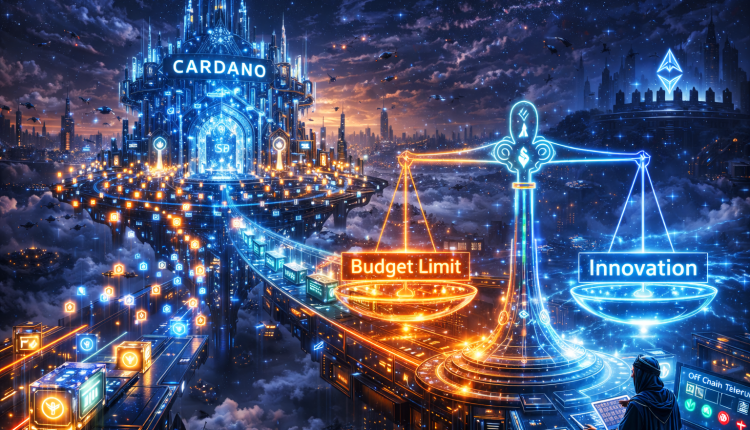
Cardano is moving from “governance as a narrative” to governance as an on-chain operating system. This week’s debates around voting speed, budget limits, and proposal thresholds show the network is entering a more accountable (and more political) era.
In our Cardano News coverage, this shift matters because governance changes don’t just affect sentiment — they directly affect how protocol upgrades, treasury spending, and ecosystem priorities get approved.
Governance Is Now a Throughput Problem (Not a Philosophy)
Online advertising service 1lx.online
Cardano’s governance design is often described as “community-led,” but 2026 is forcing a more practical question: can a decentralized governance model process real decisions fast enough without drifting into backroom coordination?
Recent community chatter highlights two signals:
- Voting velocity is becoming a headline metric. When proposals pass quickly, supporters frame it as efficiency; critics frame it as concentration and coordination.
- Proposal design is turning into game theory. Thresholds, quorums, and delegation mechanics don’t just “secure” governance — they shape who wins attention and who gets ignored.
This is why the Cardano on-chain governance 2026 conversation is starting to sound less like ideals — and more like operational risk management.
Treasury & Budget: The Quiet Center of Power
Treasury governance is where decentralization either becomes real… or becomes ceremonial.
In 2026, the biggest governance tension is not “who gets to vote,” but how much the system can spend and under what constraints. Once the network formalizes budget limits and net-change guardrails, governance becomes measurable — and controversial:
- If the treasury limit is too tight, innovation slows and large builders seek off-chain funding.
- If it’s too loose, governance becomes an incentive battlefield where marketing narratives matter more than merit.
- If accountability is weak, governance becomes capture-prone even with high participation.
That is exactly why Cardano on-chain governance 2026 is turning into a macro story: it defines Cardano’s ability to fund itself without recreating centralized grant committees.
Online advertising service 1lx.online
You can see more ecosystem shifts and structural updates in our dedicated Cardano News section.
Delegation Reality: DReps Can Decentralize — or Centralize Faster
Delegated representatives (DReps) are a powerful scaling layer for governance, but they come with a familiar tradeoff: delegation increases throughput by compressing influence.
In practice, DReps create a “political economy” inside the chain:
- Smaller holders gain leverage by delegating intelligently.
- Larger holders gain leverage by organizing reputational authority.
- Ecosystem institutions gain leverage by shaping proposals and framing outcomes.
Online advertising service 1lx.online
If Cardano gets DRep incentives right, it becomes one of the cleanest experiments in scalable on-chain decision-making. If it gets them wrong, it becomes a faster version of the same concentration dynamics that governance was meant to avoid.
This is where comparisons to Ethereum News become useful: Ethereum’s governance remains largely off-chain and social-consensus-driven, while Cardano is pushing decisions into explicit on-chain structures. That difference can become a competitive advantage — or a coordination burden.
Market Structure Insight: When Governance Heat Rises, Derivatives Wake Up
Even when the news is “not about price,” markets still react to uncertainty around protocol direction. Governance seasons tend to increase positioning and hedging — especially when treasury decisions or upgrade timelines become headline risks.
If you’re tracking how attention is translating into participation and positioning, you can pair governance milestones with derivatives visibility via Glassnode’s ADA dashboards. It’s not “governance data,” but it does show when traders start treating governance weeks as event risk.
And if you want a reminder of what a real trust shock looks like on Cardano, revisit this historical case study:
- Cardano Chain Split Fallout: The Trust Event That Still Haunts ADA
- Ethereum Validators Quietly Rebalance: Decentralization Debate Returns
These two pieces help frame the same question from different angles: decentralization isn’t a label — it’s a maintenance task.
Our creator. Creates amazing NFT collections! Support the editor - Bitcoin_Man(TON) / Bitcoin Man Stickers(TON) / BM Numbers (TON) / Comics Book (TON) / Bitcoin_Man (ETH)
Pi Network (Guide)is a new digital currency developed by Stanford PhDs with over 55 million participants worldwide. To get your Pi, follow this link https://minepi.com/Tsybko and use my username (Tsybko) as the invite code.
Binance: Use this link to sign up and get $100 free and 10% off your first months Binance Futures fees (Terms and Conditions).
Bitget: Use this link Use the Rewards Center and win up to 5027 USDT!(Review)
Bybit: Use this link (all possible discounts on commissions and bonuses up to $30,030 included) If you register through the application, then at the time of registration simply enter in the reference: WB8XZ4 - (manual)