
Ripple Is Quietly Turning Stablecoins Into Global Banking Infrastructure
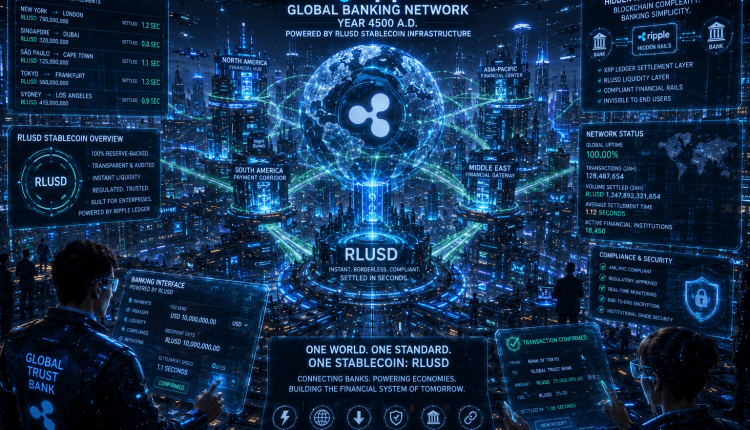
Ripple is increasingly positioning itself not as a traditional crypto company, but as invisible infrastructure for regulated global payments, stablecoin settlements, and institutional cross-border finance.
The growing discussion around RLUSD, XRP Ledger integrations, and enterprise settlement systems is reigniting a broader debate:
banks appear far more comfortable adopting blockchain when users never directly see the “crypto” layer underneath.
That shift is becoming one of the most important narratives across Ripple News and the evolving institutional blockchain economy.
Online advertising service 1lx.online
Ripple Is Quietly Becoming Banking Middleware
For years, Ripple was viewed mainly through the lens of:
- XRP price speculation
- SEC lawsuits
- exchange listings
- retail trading cycles
But the current institutional narrative looks very different.
Ripple increasingly resembles:
- settlement middleware
- stablecoin infrastructure
- compliance-ready payment rails
- backend financial architecture
rather than a typical crypto ecosystem.
This distinction matters because banks are no longer looking for “crypto exposure.”
They are looking for:
Online advertising service 1lx.online
- faster settlements
- lower cross-border costs
- programmable liquidity
- compliant digital payment systems
- invisible blockchain infrastructure
Ripple is targeting exactly that layer.
RLUSD Signals a Bigger Institutional Strategy
Much of the recent discussion centers around RLUSD and how Ripple may use stablecoins to accelerate institutional blockchain adoption without exposing users to volatility.
This changes the onboarding equation significantly.
Online advertising service 1lx.online
Banks historically hesitated around crypto because of:
- volatility risks
- custody concerns
- regulatory uncertainty
- user trust issues
Stablecoin-based infrastructure removes much of that friction.
Instead of interacting directly with speculative assets, institutions can increasingly use blockchain rails while still denominating value in stable digital dollars.
This trend already appears across broader Blockchain News discussions where financial infrastructure quietly moves on-chain beneath familiar banking interfaces.
XRP Ledger Is Evolving Beyond Speculation
Another important shift is happening around the XRP Ledger itself.
The ecosystem is increasingly being discussed as infrastructure for:
- stablecoin issuance
- tokenized settlements
- cross-border liquidity
- institutional asset transfers
- regulated financial applications
rather than purely retail trading activity.
That evolution changes the perception of XRP Ledger entirely.
Instead of competing as a consumer-facing crypto product, Ripple increasingly targets the backend architecture of global finance.
In many ways, this resembles an attempt to modernize correspondent banking systems using blockchain settlement rails.
The comparison to SWIFT is appearing more frequently in fintech discussions for exactly that reason.
Banks Want Blockchain Without “Crypto Complexity”
One of the most powerful dynamics driving Ripple’s institutional positioning is psychological.
Financial institutions increasingly want:
- blockchain efficiency
- programmable transfers
- instant settlements
- tokenized liquidity
without forcing customers to learn:
- wallets
- private keys
- exchanges
- gas fees
- crypto interfaces
Ripple’s infrastructure model fits that demand extremely well.
The blockchain becomes invisible.
Users simply experience:
- faster transfers
- cheaper settlements
- smoother international payments
- near-instant liquidity movement
while the underlying infrastructure operates silently underneath.
This mirrors a broader industry trend already visible across recent Ripple News and institutional blockchain developments.
Ripple May Be Targeting the Backend of Global Finance
The larger implication is strategic.
Ripple increasingly appears less focused on becoming:
- “the next big crypto platform”
and more focused on becoming:
- “the settlement infrastructure banks quietly depend on.”
That is a fundamentally different market position.
If stablecoins continue replacing slow correspondent banking rails, Ripple could become deeply embedded inside:
- international settlements
- fintech infrastructure
- bank-to-bank liquidity systems
- programmable financial networks
- tokenized payment ecosystems
without most end users even realizing blockchain is involved.
This invisible infrastructure model may ultimately become one of the most important paths toward mainstream blockchain adoption.
Our creator. Creates amazing NFT collections! Support the editor - Bitcoin_Man(TON) / Bitcoin Man Stickers(TON) / BM Numbers (TON) / Comics Book (TON) / Bitcoin_Man (ETH)
Pi Network (Guide)is a new digital currency developed by Stanford PhDs with over 55 million participants worldwide. To get your Pi, follow this link https://minepi.com/Tsybko and use my username (Tsybko) as the invite code.
Binance: Use this link to sign up and get $100 free and 10% off your first months Binance Futures fees (Terms and Conditions).
Bitget: Use this link Use the Rewards Center and win up to 5027 USDT!(Review)
Bybit: Use this link (all possible discounts on commissions and bonuses up to $30,030 included) If you register through the application, then at the time of registration simply enter in the reference: WB8XZ4 - (manual)