
Libra Return to the Conversation Is Reigniting the Stablecoin Power Debate
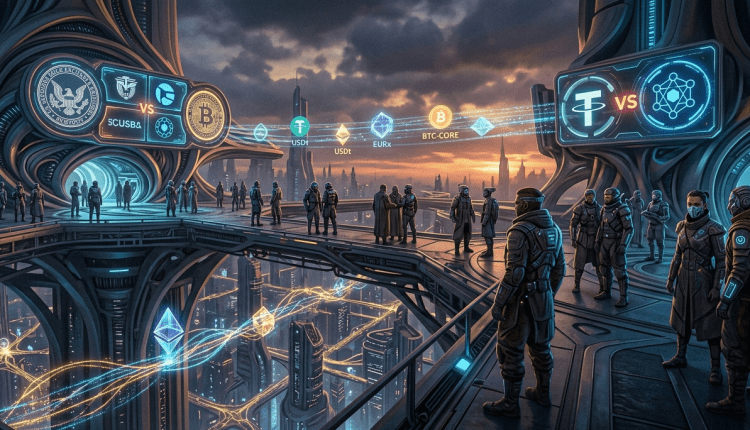
Libra is suddenly returning to crypto discussions as governments accelerate stablecoin regulation, banks expand tokenized payment systems, and Big Tech quietly re-enters the programmable finance conversation.
What was once dismissed as Meta’s failed digital currency experiment is now being reframed in a completely different way:
perhaps Libra was not wrong — just early. You can follow more developments across our dedicated Cryptocurrency News and Blockchain News sections.
Libra Failed Publicly — But Its Core Ideas Never Died
Online advertising service 1lx.online
When Meta first introduced Libra, the backlash was immediate.
Governments, regulators, and central banks reacted aggressively because Libra represented something unprecedented:
a private global payment infrastructure backed by one of the world’s largest technology companies.
At the time, critics framed the project as:
- dangerous corporate money,
- a threat to national currencies,
- and an attempt by Big Tech to bypass traditional banking systems.
The political pressure became overwhelming.
Libra eventually transformed into Diem before collapsing entirely.
But the core ideas behind the project never disappeared.
In fact, many of them quietly became industry standards:
- stablecoin settlement,
- programmable payments,
- tokenized financial rails,
- invisible blockchain infrastructure,
- and digital wallet ecosystems.
Online advertising service 1lx.online
The phrase Libra stablecoin debate is now resurfacing across X, Reddit, fintech podcasts, and institutional payment discussions as users revisit whether Libra was actually a preview of the financial future.
BTCNews.space recently explored similar infrastructure transformations in:
- Ripple Is Quietly Turning Stablecoins Into Global Banking Infrastructure
- TON Is Becoming Invisible Inside Telegram — Users Don’t Even Notice Crypto
The resemblance is becoming difficult to ignore.
Stablecoins Have Become Geopolitical Infrastructure
Online advertising service 1lx.online
The reason Libra discussions feel so different in 2026 is because stablecoins are no longer viewed as niche crypto tools.
They are becoming geopolitical financial infrastructure.
Governments worldwide are now debating:
- stablecoin licensing,
- cross-border payment control,
- tokenized banking systems,
- CBDC competition,
- and programmable financial oversight.
At the same time:
- banks are launching tokenized settlement layers,
- fintech companies are integrating blockchain rails,
- and AI systems increasingly require machine-native payment infrastructure.
This changes the historical interpretation of Libra entirely.
The project may have represented the first moment governments realized they were losing control over payment innovation.
BTCNews.space also explored the growing tension between stablecoin expansion and financial oversight in:
- Tron Becomes the Global USDT Rail — But a Regulatory Storm Is Forming
- Tron USDT Freeze Alerts Spark a New Debate Over Stablecoin Control
Libra now looks less like an isolated failure and more like the opening chapter of a much larger global battle.
Big Tech and Central Banks Are Quietly Converging
Another reason Libra is returning to discussions is the growing convergence between:
- Big Tech infrastructure,
- digital identity systems,
- AI economies,
- and programmable money.
The future financial system increasingly appears to be moving toward:
- invisible payments,
- wallet-native ecosystems,
- AI-to-AI settlement,
- and embedded finance integrated directly into digital platforms.
Ironically, that is extremely close to the original Libra vision.
The difference is that today:
- governments want oversight,
- banks want participation,
- and corporations want infrastructure influence.
The modern financial race is no longer simply about cryptocurrency.
It is about who controls the rails of digital economic activity itself.
Libra May Have Been the First Warning Shot
The deeper implication behind Libra’s return to conversation is political.
For years, the project was portrayed as a failed corporate overreach experiment.
But history may reinterpret it differently.
Libra may have been:
- the first major collision between Big Tech and monetary sovereignty,
- the first large-scale attempt at global programmable money,
- and the first moment regulators realized blockchain-based payment systems could evolve faster than traditional institutions.
That realization continues shaping policy worldwide today.
The irony is striking:
Libra disappeared publicly —
while many of its ideas quietly spread everywhere.
Our creator. Creates amazing NFT collections! Support the editor - Bitcoin_Man(TON) / Bitcoin Man Stickers(TON) / BM Numbers (TON) / Comics Book (TON) / Bitcoin_Man (ETH)
Pi Network (Guide)is a new digital currency developed by Stanford PhDs with over 55 million participants worldwide. To get your Pi, follow this link https://minepi.com/Tsybko and use my username (Tsybko) as the invite code.
Binance: Use this link to sign up and get $100 free and 10% off your first months Binance Futures fees (Terms and Conditions).
Bitget: Use this link Use the Rewards Center and win up to 5027 USDT!(Review)
Bybit: Use this link (all possible discounts on commissions and bonuses up to $30,030 included) If you register through the application, then at the time of registration simply enter in the reference: WB8XZ4 - (manual)