
Zcash Privacy Upgrade Puts “Shielded by Default” Back on the Map
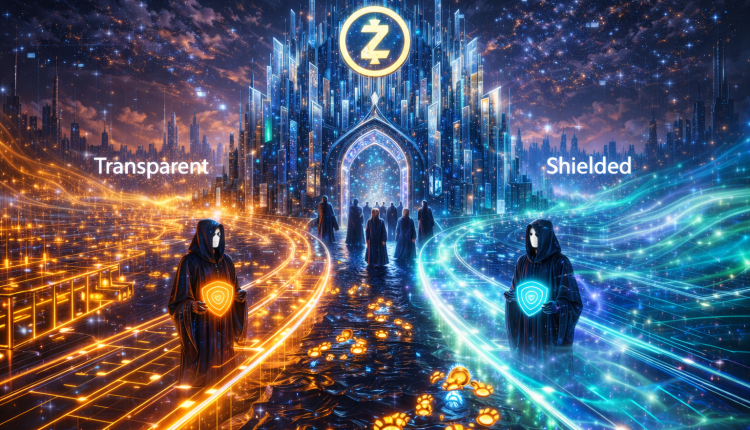
Zcash is moving closer to making private transfers feel normal again — and that is forcing regulators, exchanges, and wallets to revisit where “privacy” ends and “compliance” begins.
Privacy Is Not New — Usability Is
Zcash has always been one of the clearest examples of “privacy as a protocol feature,” but adoption has historically been limited by UX friction: wallet support, confusing address formats, and the extra steps required to use shielded pools.
Online advertising service 1lx.online
What’s changing now is not the concept of privacy, but the push to make Zcash shielded transactions simpler to use in real life. When privacy becomes the default experience instead of a niche feature, the network’s role shifts from “privacy coin for experts” to “private payments rail anyone can actually use.”
In other words: Zcash shielded transactions are being positioned less like an optional add-on and more like a mainstream pathway.
After the second wave of headlines around compliance pressure, this new cycle is more technical than sensational — and it’s exactly why Zcash shielded transactions are back in the industry conversation.
You can see more updates and related market stories in our dedicated Zcash News section.
What “Shielded by Default” Really Means in 2026
The debate usually gets framed as “privacy vs. regulation,” but the real battleground is defaults:
- If wallets make shielded transfers one tap away, usage rises.
- If wallets hide shielded options behind warnings and advanced menus, usage stays small.
- If exchanges restrict deposits/withdrawals involving shielded pools, liquidity centralizes elsewhere.
That is why the current momentum matters: usability improvements don’t just increase adoption — they change who must respond (wallets, exchanges, payment processors, and regulators).
And yes, Bitcoin is part of this story too: the more self-custody culture expands, the more users compare privacy standards across networks. We’ve seen similar “what should be default?” arguments spill into broader Bitcoin News discussions around censorship resistance and transaction policy.
Online advertising service 1lx.online
Compliance Pressure Is Shifting From “Bans” to “Frameworks”
The loudest era of privacy-coin drama was delistings and blanket restrictions. The newer phase looks different:
- more focus on risk scoring and transaction monitoring,
- more emphasis on provider-level controls (exchanges, brokers, gateways),
- more questions about what “reasonable” compliance looks like when privacy is a built-in feature.
That’s why this cycle is so important for ZEC: if Zcash shielded transactions become easier and more common, the market will get a real-time stress test of modern compliance models.
A practical outcome to watch is whether platforms treat shielded transfers as “high risk by default” or whether they develop clearer policies that allow privacy functionality without pushing everything into gray zones.
Online advertising service 1lx.online
How to Read the On-Chain Signal Without Overreacting
For readers tracking behavior (not price), the key question is simple: are shielded pools gaining consistent usage, or is activity spiking only during news cycles?
A clean approach is to watch:
- changes in transaction composition over time,
- whether deposits/withdrawals patterns suggest wallet-led adoption,
- whether activity concentrates around a small cluster of services.
If you’re monitoring cross-market flows or exchange-side behavior, compare broader crypto liquidity signals via CryptoQuant and wallet/entity-style tagging via Arkham Intelligence. For macro on-chain context (where supported), Glassnode is useful for benchmarking network behavior trends across large-cap assets.
Where This Goes Next
If Zcash succeeds at making privacy UX normal, it will force a clearer industry answer to a question that never went away:
Do we want privacy to be a niche tool for specialists — or a default right for ordinary users?
Either way, the next few months will likely produce more “policy language” than “price language,” because the technology direction is what’s provoking the response.
For historical context on how these cycles tend to escalate, revisit:
- Zcash back in the spotlight as privacy coins re-enter regulatory debate
- Zcash privacy upgrade debate returns as regulators tighten the screws
Our creator. Creates amazing NFT collections! Support the editor - Bitcoin_Man(TON) / Bitcoin Man Stickers(TON) / BM Numbers (TON) / Comics Book (TON) / Bitcoin_Man (ETH)
Pi Network (Guide)is a new digital currency developed by Stanford PhDs with over 55 million participants worldwide. To get your Pi, follow this link https://minepi.com/Tsybko and use my username (Tsybko) as the invite code.
Binance: Use this link to sign up and get $100 free and 10% off your first months Binance Futures fees (Terms and Conditions).
Bitget: Use this link Use the Rewards Center and win up to 5027 USDT!(Review)
Bybit: Use this link (all possible discounts on commissions and bonuses up to $30,030 included) If you register through the application, then at the time of registration simply enter in the reference: WB8XZ4 - (manual)