
Governments Are Seizing Bitcoin Again — and the “Dirty Coins” Debate Is Back
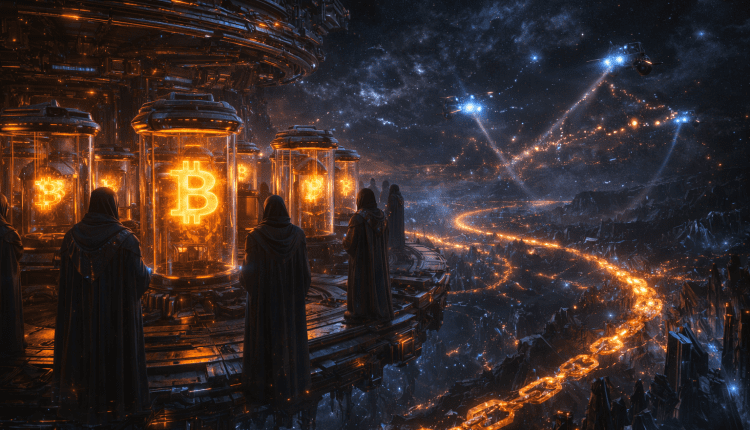
Bitcoin seizures are trending again, but the bigger story isn’t the headline number — it’s what happens next. As governments build larger stockpiles of seized Bitcoin, the market is being forced to re-litigate an old question: is BTC truly neutral, or does history follow the coin?
The new seizure cycle isn’t just law enforcement — it’s market structure
A few years ago, the public narrative around confiscations was simple: authorities seize BTC, then sell it, and the market absorbs the supply. But that “auction-and-forget” playbook is changing.
Online advertising service 1lx.online
In 2025, U.S. policy discussion shifted toward retaining a large reserve of previously seized BTC rather than liquidating it immediately — essentially treating it like a strategic asset rather than evidence that eventually becomes sell pressure.
That shift matters because it changes expectations. If the market believes seized coins will be held, not dumped, then the “government wallet” becomes a long-term actor — and seized Bitcoin becomes part of the macro liquidity story, not just a crime story.
“Tainted BTC” is a social narrative — but compliance makes it real
Bitcoin is designed to be fungible at the protocol level, but exchanges, banks, and custodians don’t operate at protocol level — they operate under compliance. That’s where the “dirty coins” argument turns practical.
When large enforcement actions go viral, the debate isn’t really about whether Bitcoin can be traced (it can, to varying degrees). It’s about:
- whether risk scoring becomes more aggressive during regulatory pressure cycles
- whether innocent holders can face friction if coins are linked (directly or indirectly) to flagged clusters
- whether “clean” and “unclean” coins become an unspoken pricing layer via OTC rules, deposit holds, or extra KYC
This is why seized Bitcoin keeps resurfacing as a cultural flashpoint: it sits at the intersection of ideology (neutral money) and reality (regulated rails).
You can see more updates and market stories in our dedicated Bitcoin News section.
What happens after seizures: storage, signaling, and timing risk
Online advertising service 1lx.online
The public focuses on the seizure moment. Professionals focus on the post-seizure pipeline:
1) Custody and wallet transparency
When government-controlled wallets are identifiable, tracking platforms can monitor movements and label clusters. For analysts, this is less about “fear” and more about detecting future supply events.
2) Market impact depends on policy, not headlines
If seized assets are earmarked for restitution, held as a reserve, or scheduled for sale, the same BTC amount can mean three different market outcomes.
Online advertising service 1lx.online
3) Timing becomes the hidden risk factor
A seizure can be market-neutral today, then market-moving later if coins shift from cold storage to an auction pipeline during thin liquidity.
To follow these flows at the “wallet story” level, analysts often triangulate:
- Arkham Intelligence entity labels (wallet clustering / attribution)
- Glassnode exchange balance + long-term holder behavior
- CryptoQuant exchange inflow spikes and flow regimes
Why this story hits harder in 2026: regulation without the old U.S.-centric narrative
One reason this topic is exploding again is that enforcement and compliance pressure is becoming more global — and not always driven by the U.S.
If you want the broader context of how regulation is re-positioning outside America, revisit our earlier breakdown: Bitcoin Faces New Regulatory Pressure — And It’s Coming From Outside the US.
And if you want the parallel trend that keeps accelerating whenever seizures trend on social media, this connects directly to self-custody behavior: Why “Not Your Keys” Is Trending Again — And It’s Not About Hacks.
For the bigger infrastructure angle — how policy and compliance reshape rails even when users don’t notice — see Blockchain News.
The real question: is Bitcoin neutral, or just treated as neutral?
Bitcoin doesn’t remember. People do.
As governments accumulate larger pools of seized Bitcoin, the debate will keep returning — not because the protocol changed, but because the world around it did. What looks like a legal footnote today can become a liquidity event, a compliance precedent, or a narrative weapon tomorrow.
In other words: the seizure story is never only about crime. It’s about who controls the rails — and what the market believes “ownership” really means in a regulated era.
Our creator. Creates amazing NFT collections! Support the editor - Bitcoin_Man(TON) / Bitcoin Man Stickers(TON) / BM Numbers (TON) / Comics Book (TON) / Bitcoin_Man (ETH)
Pi Network (Guide)is a new digital currency developed by Stanford PhDs with over 55 million participants worldwide. To get your Pi, follow this link https://minepi.com/Tsybko and use my username (Tsybko) as the invite code.
Binance: Use this link to sign up and get $100 free and 10% off your first months Binance Futures fees (Terms and Conditions).
Bitget: Use this link Use the Rewards Center and win up to 5027 USDT!(Review)
Bybit: Use this link (all possible discounts on commissions and bonuses up to $30,030 included) If you register through the application, then at the time of registration simply enter in the reference: WB8XZ4 - (manual)