
Crypto Traders Are Quietly Leaving Exchanges — And the Shift Looks Structural
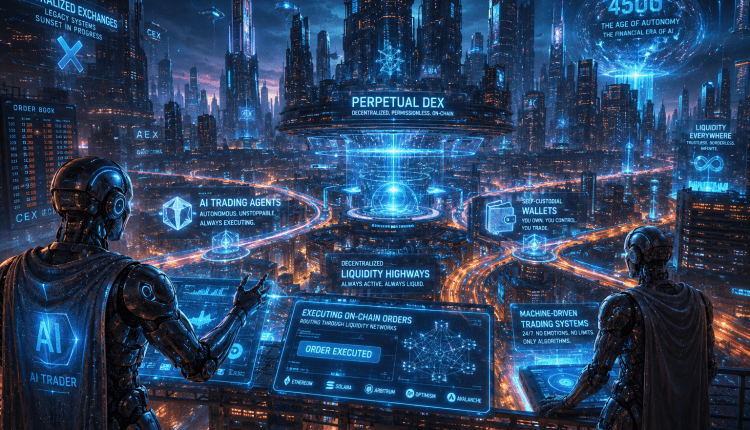
Crypto traders are increasingly discussing whether centralized exchanges are slowly becoming invisible infrastructure instead of the main destination for trading activity. The conversation is no longer only about Binance, Coinbase, or Bybit — it is becoming a debate about the future architecture of trading itself.
The rise of on-chain execution, perpetual DEX infrastructure, AI trading agents, and self-custodial finance is beginning to reshape how users interact with liquidity across the crypto ecosystem.
The broader trend is becoming visible across the entire Cryptocurrency Exchange News landscape, where discussions around self-custody and decentralized execution are accelerating faster than many expected.
Online advertising service 1lx.online
The Exchange Interface Is Starting to Disappear
For years, centralized exchanges dominated crypto trading by offering speed, liquidity, and simplified onboarding. But a growing part of the market is now experimenting with a completely different model:
- on-chain perpetual trading,
- decentralized order execution,
- wallet-native trading systems,
- and AI-powered autonomous execution.
Instead of manually placing trades on traditional platforms, traders are increasingly exploring systems where liquidity is accessed invisibly through smart contracts and automated routing layers.
Protocols such as Hyperliquid, dYdX, Vertex, and other perp DEX ecosystems are fueling a new discussion:
What if exchanges eventually become liquidity engines operating quietly in the background rather than destinations users actively visit?
That narrative is beginning to spread rapidly across X, Telegram trading communities, and Reddit discussions focused on self-custodial infrastructure.
You can follow more market structure updates in our dedicated Trading News section.
AI Trading Agents Are Quietly Changing Market Behavior
One of the biggest shifts comes from the emergence of AI trading agents capable of executing strategies autonomously.
Online advertising service 1lx.online
Instead of users constantly interacting with interfaces, AI systems are beginning to:
- route liquidity,
- monitor volatility,
- manage risk,
- rebalance positions,
- and execute trades across multiple decentralized venues automatically.
This changes the role of exchanges entirely.
The future trading interface may not look like a traditional exchange dashboard at all. Instead, users could simply define strategies while autonomous systems handle execution behind the scenes.
That is why many analysts believe crypto trading is entering the same disruption cycle banks already face:
infrastructure becomes invisible while automation handles complexity.
Online advertising service 1lx.online
Recent Artificial Intelligence News coverage from BTCNews.space has already highlighted how AI agents are increasingly integrating directly with blockchain financial systems.
Self-Custody Is Becoming a Structural Narrative Again
The renewed interest in self-custody is also helping accelerate the shift away from centralized exchange dependence.
After multiple industry failures over recent years, traders increasingly view:
- private wallets,
- decentralized execution,
- and direct on-chain ownership
as long-term infrastructure rather than ideological preferences.
This trend is especially visible among advanced crypto-native traders who increasingly prioritize:
- wallet control,
- permissionless liquidity access,
- and cross-chain execution systems.
The emotional shift is important.
For years centralized exchanges were considered untouchable gatekeepers of the crypto economy.
Now the conversation is quietly evolving toward a new question:
What happens if centralized exchanges become backend liquidity providers instead of the front-end user experience?
That possibility is no longer theoretical. According to recent Cryptocurrency Exchange News discussions, users are increasingly comfortable interacting directly with liquidity layers rather than relying entirely on custodial platforms.
Invisible Liquidity May Define the Next Trading Era
The long-term implication may be even larger than the rise of DEXs themselves.
The future crypto exchange may not resemble an exchange at all.
Liquidity could become:
- invisible,
- embedded,
- AI-routed,
- and accessible directly through wallets, apps, Telegram interfaces, games, or autonomous agents.
In that model, centralized exchanges may still remain critically important — but increasingly as settlement and liquidity infrastructure operating beneath the user experience.
That is why many developers now describe the next phase of crypto trading not as “decentralized exchanges replacing centralized exchanges,” but as trading itself becoming invisible infrastructure.
This broader transformation is already visible across multiple BTCNews.space reports, including
Our creator. Creates amazing NFT collections! Support the editor - Bitcoin_Man(TON) / Bitcoin Man Stickers(TON) / BM Numbers (TON) / Comics Book (TON) / Bitcoin_Man (ETH)
Pi Network (Guide)is a new digital currency developed by Stanford PhDs with over 55 million participants worldwide. To get your Pi, follow this link https://minepi.com/Tsybko and use my username (Tsybko) as the invite code.
Binance: Use this link to sign up and get $100 free and 10% off your first months Binance Futures fees (Terms and Conditions).
Bitget: Use this link Use the Rewards Center and win up to 5027 USDT!(Review)
Bybit: Use this link (all possible discounts on commissions and bonuses up to $30,030 included) If you register through the application, then at the time of registration simply enter in the reference: WB8XZ4 - (manual)